
The ‘Every Child Achieving and Thriving’ White Paper, published in February 2026, commits £1.6bn to the Inclusive Mainstream Fund (IMF) over the next three years. This covers mainstream schools, colleges and early-years settings, with £400m a year allocated to schools. Seven months on, with the new academic year underway and inclusion strategies due by the end of December, schools are moving from policy headlines to practical decisions.
Much of the conversation has focused on staffing, specialist support and the school estate. Accessible ICT has received less attention, even though it can offer a direct and practical way to improve inclusion.
The right technology can help remove barriers to communication, learning and participation for pupils with SEND. It’s a genuine opportunity for schools to bring inclusion and technology planning together as priorities for the rest of the year take shape.
What the IMF covers
The IMF gives mainstream schools additional funding to strengthen the support available to pupils with SEND. It is available to mainstream state-funded schools in England, covering pupils from reception to age 16.
Schools do not need to apply. Funding was paid to local authorities at the end of June and directly to academy trusts in early July. Maintained schools receive their allocation through their local authority, while new and growing schools follow a later timetable.
The DfE guidance includes carefully selected technology among the ways schools can improve accessibility. Any investment should respond to barriers identified across the school, be supported by appropriate evidence and fit within the seven principles of inclusion. The IMF is not intended as a personal budget for individual pupils, and it cannot be used for general running costs, pre-existing activity or capital works.
This means accessible ICT can form part of a school’s plans where it contributes to a wider, evidence-informed approach to inclusion.
Each eligible school must publish an inclusion strategy statement by 31 December 2026, setting out the barriers pupils face, planned activity, costs and intended outcomes. This gives SLT and governors a useful structure for considering where accessible ICT could make a practical difference.
What ‘accessible ICT’ means in practice
There is no single list of technology that will be right for every school. Depending on the barriers pupils face and the support already available, schools might consider:
Assistive technology may include communication aids for pupils who do not use speech, screen-reading software for pupils with visual impairments and voice-control tools for those who find a keyboard or touchscreen difficult. Some pupils may use switches in place of a keyboard or mouse. Others may benefit from eye-gaze technology, which controls a device through eye movement.
Specialist software licences might include literacy support tools, communication apps and sensory regulation aids built specifically around SEND learning needs.
Device modifications and peripherals can often be overlooked when schools think about “ICT”. Adapted keyboards, large-key keyboards, specialist mice and mounting equipment for devices used with wheelchairs or other mobility aids may all be relevant, depending on pupils’ needs, and can make a real difference to whether a pupil can use a device independently.
Accessible digital learning systems are also worth considering. Schools can review whether learning platforms and classroom resources work properly with assistive technology, whether built-in accessibility features are enabled and whether pupils can move between devices and systems without losing access to the support they need.
When considering any accessible technology, it can be helpful to involve the staff and pupils who will use it. This gives schools a clearer view of whether the equipment will work well in practice and what support or training may be needed.
The link to digital Individual Support Plans
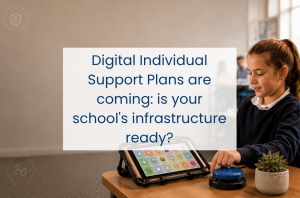
The White Paper also sets out plans for digital Individual Support Plans (ISPs) for pupils with identified SEND. If introduced, these would record the barriers a pupil faces, the support available and any reasonable adjustments being made. The proposals will require legislation, and existing SEND duties continue to apply in the meantime.
Accessible ICT may form part of that support. An ISP could record that a pupil uses a communication aid, adapted keyboard, screen reader or another tool that helps them take part in learning. It could also provide a clearer way for staff and families to review whether that support is working.
Considering accessible ICT alongside preparations for digital ISPs gives schools a more joined-up view of pupils’ needs. Technology, staff training and access arrangements could then be considered as part of the school’s wider IMF and inclusion planning. Bringing these decisions together may also save staff time, help budgets go further and reduce the need to revisit choices later.
Procurement considerations
Using IMF funding does not change the usual procurement responsibilities. Schools should establish whether the school, academy trust or local authority will be making the purchase and follow the relevant financial and procurement rules. Where several schools in a trust are buying similar products, the trust may also need to consider the combined value of that spending.
When comparing suppliers, schools may wish to consider relevant experience alongside price, service and delivery. This could include examples of work in similar settings, accessibility testing, compatibility with existing systems, data protection and cybersecurity arrangements, staff training and ongoing support.
Some assistive technology requires careful setup and may take time for pupils and staff to become comfortable with. A demonstration involving the SENCO, teaching staff and ICT colleagues can help the school understand how a product would work in practice and what support may be needed after purchase.
Schools should be clear about what they expect the technology to achieve. Possible outcomes might include improved participation and independence for pupils, greater staff confidence or more consistent access to learning. Recording the intended outcome, cost and approach to reviewing progress will help show how the investment supports the school’s wider inclusion strategy.
A funding opportunity worth acting on
The IMF connects substantial new funding with a need that many schools already recognise and may not previously have had the budget to address fully. Accessible ICT can play a useful role by removing barriers and making it easier for pupils to take part in lessons and wider school life.
With autumn budget discussions under way and inclusion strategies due by 31 December, this is a useful point for SLT and governors to consider where accessible technology could fit within the school’s wider priorities.
If you’d like to talk through what accessible ICT could look like for your school, or how to plan a compliant procurement process using IMF funding, get in touch with our team.