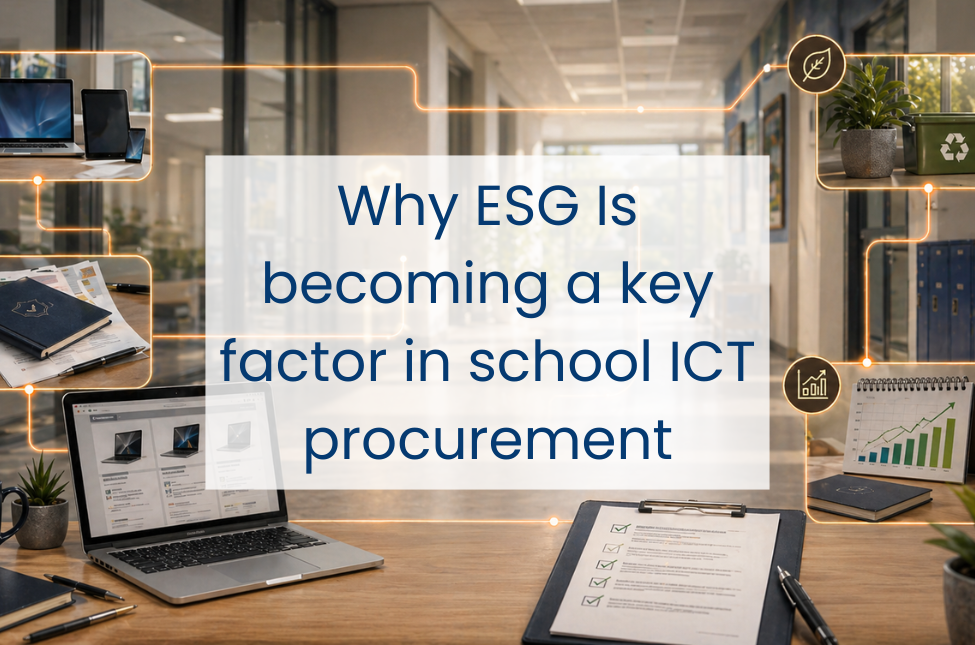
ICT procurement in schools has traditionally centred on cost, compliance and making sure the technology is fit for purpose. Those factors still matter, but they are no longer the full picture. Schools and trusts are also thinking more carefully about how procurement decisions affect resource use, long-term value and wider organisational priorities.
For leadership teams, school business managers and MAT executives, Environmental, Social and Governance (ESG) is becoming a more practical part of procurement decision-making. It shapes how schools plan technology refreshes, assess suppliers, manage budgets over time and make sure ICT investment supports broader goals around sustainability and governance.
Through Everything ICT, schools can take a compliant and structured approach to procurement while keeping those wider considerations in view.
What ESG means for education organisations
While the term ESG often comes from the corporate world, for schools and trusts it really comes down to making responsible, well-informed decisions.
In practice, the environmental side of ESG is about things like energy use, reducing waste, planning properly for the lifespan of devices and making sure old equipment is reused or recycled where possible.
The social side is about the wider impact of procurement choices. That includes accessibility, digital inclusion, ethical supply chains and making sure purchasing decisions support staff, pupils and the communities schools serve.
Governance is the decision-making behind it all. Are procurement processes clear and transparent? Has due diligence been done? Can leaders show value for money and explain why a particular route or supplier was chosen?
For schools, ESG connects directly to budgets, compliance, sustainability goals and the way trusts and schools want to operate.
Device lifecycle planning matters more than ever
Device lifecycle planning is becoming a more important part of ICT procurement, particularly for schools and trusts trying to balance performance, budget control and sustainability.
Rather than focusing only on the point of purchase, many leadership teams are looking more closely at the full lifespan of devices. That includes how long equipment is likely to remain effective in a school environment, whether it can be repaired or reassigned, and what the most responsible option is when it reaches end of life.
Taking that longer view can make a real difference. It supports more predictable budgeting, helps reduce disruption for staff and pupils, and makes it easier to align ICT decisions with wider sustainability goals. It also gives schools the opportunity to think about reuse, refurbishment and recycling in a more planned way.
For leadership and governance teams, lifecycle planning has a direct impact on value over time, resource management and how well procurement decisions support the organisation’s broader priorities.
Supplier responsibility is getting more attention
Schools and trusts are looking more closely at the standards behind the products and services they buy. That can include things like environmental policies, ethical sourcing, labour standards, packaging, delivery practices, take-back schemes and whether suppliers can provide the information schools need as part of the procurement process.
It is not about carrying out a detailed corporate investigation every time, but it is about having confidence that suppliers are operating responsibly and can answer sensible questions when needed.
This also matters from a governance point of view. Procurement decisions need to be clear, well supported and easy to justify. If governors, trustees or auditors want to understand why a particular supplier was chosen, there should be a clear explanation behind that decision.
Everything ICT supports schools by providing a compliant procurement route that helps make those considerations easier to manage as part of a wider procurement process.
Energy efficiency has a place in procurement decisions
Energy efficiency is also becoming a bigger part of the conversation, especially as schools continue to manage rising running costs and broader sustainability commitments.
ICT may only be one part of a school’s overall energy use, but it can still make a difference, particularly across large estates or trust-wide deployments. Devices, displays, charging setups, servers and network infrastructure all contribute to day-to-day consumption.
Energy efficiency affects operational spend, estate planning and how well procurement decisions support wider sustainability goals. It also links back to value for money. A cheaper option at the point of purchase may not always be the most cost-effective over time if it is more expensive to run or maintain.
ICT purchasing can support wider sustainability goals
ESG is becoming more relevant to school ICT procurement because these decisions do not sit in isolation. The decisions schools make about technology can support wider goals across the organisation.
That might include reducing waste, improving asset management, supporting digital inclusion or aligning procurement with a climate action plan. In some cases, it is also about strengthening governance by making sure decisions are well documented, properly considered and linked to strategic priorities.
Framework procurement can play an important role here. Everything ICT helps schools and trusts procure compliantly while also giving them a practical route to incorporate broader considerations into decision-making, such as lifecycle planning, supplier standards and long-term value.
A more joined-up approach to procurement
ESG is becoming a key factor in school ICT procurement because expectations are changing. Schools are being asked to think carefully about how public money is spent, how procurement decisions affect long-term outcomes and how those decisions support wider organisational aims.
That doesn’t mean every procurement exercise needs to become more complicated. It means taking a broader view of what good procurement looks like.
For leadership and governance teams, ICT procurement is no longer just about securing the right equipment at the right price. It is also about planning well, managing resources responsibly and making decisions that hold up strategically as well as financially.
With the right approach, schools can make procurement decisions that support sustainability goals without losing sight of compliance, practicality or educational need. Everything ICT supports that process by giving schools and trusts a framework that helps bring those priorities together in a clear and manageable way.