The UK is retiring the old landline phone network, including PSTN and ISDN services, and moving to digital, internet-based telephony. The deadline shaping planning is now January 2027. This is happening because the legacy network is reaching the end of its useful life. It is harder to maintain, more prone to faults, and no longer aligned with the way communications infrastructure is now being built.
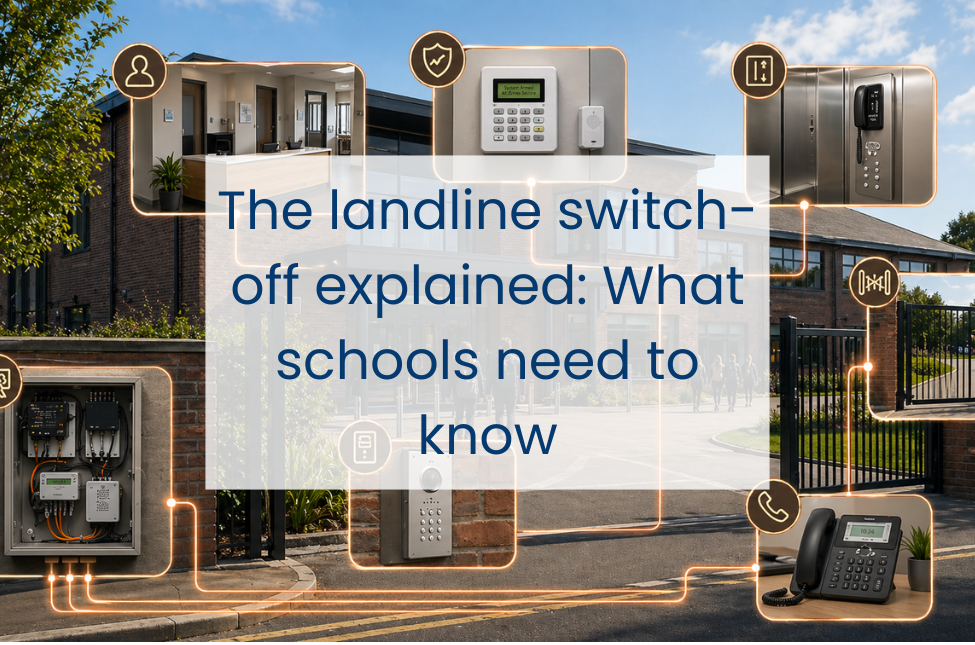
In schools, that reaches beyond the phone system. Analogue lines often remain in place behind alarms, lift emergency phones, entry systems and other older services across the site. In many cases, those connections have remained in place for years without anyone needing to look at them together.
What sits behind the phone line
The obvious area affected is telephony. But in schools, analogue lines have often been used for far more than handsets.
Depending on the age of the site and how systems were installed, those lines may still sit behind alarms, lift emergency phones, intercoms, gates, door entry systems and other services that have simply stayed in place because they still work. That is why the DfE is now encouraging education settings to audit their estates and identify copper-based services that need attention ahead of the switch-off.
The difficulty is that many schools do not yet have a single clear view of what still relies on those connections. ICT may know one part. Estates may know another. A supplier may hold part of the history. The contract may sit somewhere else entirely. In a busy school or trust, that is not unusual. It is what happens when systems stay in place for years without needing much attention.
The issue is not just that those dependencies exist. It is that they can remain largely invisible until a contract changes, a service is upgraded or a problem forces them into view.
Why this matters beyond ICT
If a school is relying on analogue connectivity for alarms, lifts, entry systems or emergency communication, this becomes an issue of operational resilience. It also reaches into safeguarding and governance.
SLTs need to know which services are affected and which of them are critical to the safe and effective running of the school. Governors and trustees do not need the technical detail, but they do need assurance that leadership understands those dependencies and is managing them properly.
Ofcom has been clear that digital services are not a like-for-like replacement for analogue lines. The difference is most obvious during a power cut, when a digital service may rely on local power or backup measures in a way an older line did not. Providers have obligations during the migration, but schools still need to understand the practical implications for any critical systems connected to those lines.
What SLTs and governors need to know
The shift away from analogue lines is already in progress. For schools, this is best treated as a live infrastructure issue now, while there is still time to review dependencies properly and plan change in a controlled way.
The main risk is hidden dependency. A school can update its phone system and still miss an older service elsewhere on site that depends on the same analogue connection. Disruption is more likely to come from overlooked detail in the background than from the headline change itself.
For MATs, the position is usually uneven. One school may already have modern systems and clear records. Another may still be working around older infrastructure, inherited contracts and limited documentation. That is a familiar picture across many estates. Trust leaders therefore need visibility across schools, with a clear understanding of where dependencies sit and where further review is still needed.
Governance matters here as well. Boards need assurance that leaders understand what falls within scope, which services are business-critical, where the main dependencies sit and whether timescales are being managed in a controlled way.
Why a review needs to happen now
The practical work starts with clarity.
Schools need a clear picture of which lines and services still depend on analogue infrastructure, which of those services are critical, and who holds responsibility for each supplier relationship. Trusts need the same understanding across the estate. Without it, decisions can become reactive, budget planning becomes less certain, and dependencies are more likely to surface late.
In most schools, this is not complicated work, but it does require attention. A calm, organised review now gives schools more control over timing, cost and risk than a rushed response later.
Where telephony does need to be replaced or upgraded, procurement matters alongside technical planning. Everything ICT’s Department for Education (DfE)-approved framework can give schools and trusts a compliant route to market, reduce unnecessary delay and make it easier to compare suitable options without rebuilding the process from the beginning. Due diligence still matters, but a good framework can make the process more manageable when the need to act becomes clear.
What good planning looks like
For most schools and trusts, the next step is a clear view of what sits where, which services matter most and where decisions need to be made first.
That work is rarely dramatic. It usually comes down to identifying dependencies, checking resilience, understanding contract positions and making sure responsibility is clear. Done early, it gives schools more control over pace, cost and sequencing. Left later, it tends to compress decisions that would have benefited from more time.