
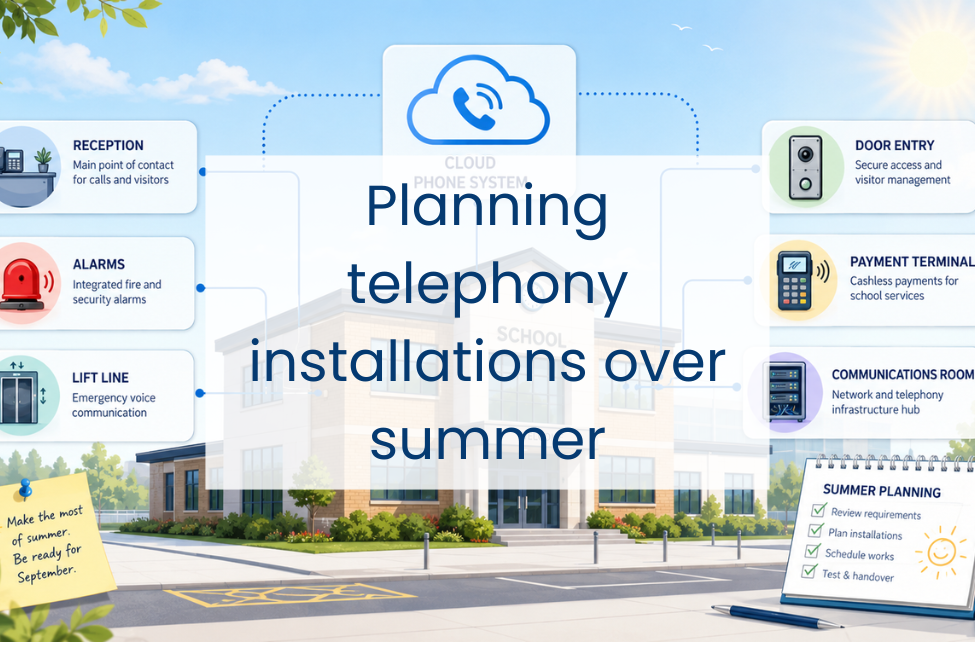
Telephony is one of those jobs where the installation is only part of the work. The planning, dependencies and testing matter just as much, especially in a school where reception, safeguarding, site access and emergency contact routes all need to keep working.
For some schools, this is becoming harder to defer. The UK’s analogue phone network is due to be retired by the end of January 2027, so any remaining legacy phone services will need to be moved to digital alternatives before then.
A phone system change can reach beyond the handsets themselves. It may affect the network underneath it, the way calls are routed, and connected services such as door entry or older analogue devices.
The summer break gives schools a practical window to complete that work with less disruption. The point now is to make the decisions before the end of term, while there is still time to audit what is in place, confirm what needs to change and get installation dates agreed.
Why summer works well for telephony projects
Telephony projects tend to involve several moving parts. Even a relatively simple migration may require access to comms rooms, offices, classrooms and shared spaces, as well as input from IT, site staff, reception teams and external suppliers.
During term time, that creates avoidable friction. Installers need to work around safeguarding arrangements, room use and live services. Testing gets squeezed into smaller gaps. Minor issues become more disruptive because there is less flexibility in the day.
The quieter site period gives schools a cleaner run at the work. Access is easier. Planned outages are easier to manage. There is more time to test, correct and document before staff return.
Everything ICT can support schools at this stage by helping them procure the ICT products and services linked to a telephony project through a compliant route, including network infrastructure, internet connectivity, cloud services and managed support where needed.
Check what still depends on legacy lines
Any services still dependent on the analogue phone network will need to move to digital alternatives before the switch-off. That means more than standard voice lines. Older services such as alarms, lift lines, door entry, fax machines and payment terminals may also need checking.
Not every school will need a large telephony project this summer. But every school should know what is still in place, what is affected, and whether the summer break is the right point to make changes before installation options become tighter.
Start with what is actually in use
Before looking at replacements, confirm what the current setup is supporting.
That means the phone system itself, including extensions, DDI numbers, hunt groups, voicemail and call routing, as well as any services still relying on legacy lines, such as lift lines, alarms, door entry, fax services or payment terminals.
A simple audit should show:
- what lines exist
- what each line is used for
- where each service terminates
- which numbers need to be retained
- which services need migrating, replacing or retiring
This is also a useful point to check whether the current setup still reflects how the school works. Many systems contain old extensions, outdated routing and workarounds that have become permanent.
Check network readiness before booking installation
A digital phone system relies on the network in a way an older system often did not. That does not automatically mean major upgrades are needed, but it does mean the basics should be checked before installation dates are fixed.
Useful checks include:
- switch capacity and Power over Ethernet availability
- voice VLAN design and Quality of Service
- internet bandwidth and resilience
- firewall requirements
- Wi-Fi coverage where wireless handsets are involved
- UPS coverage for key network and telephony equipment
- what happens to calling during a power or connectivity failure
These are routine checks, but they are much easier to deal with before installation begins than during an August rollout when a dependency has already become a blocker.
Everything ICT can support schools that need related upgrades by helping them procure network infrastructure, connectivity and cloud services through one compliant route. That helps keep linked parts of the project aligned instead of being handled as separate exercises.
Build the schedule around dependencies
A workable summer plan should reflect the order in which the project actually needs to happen.
That usually means confirming:
- line and number audits
- porting lead times
- connectivity changes
- any cabling or switching work
- handset delivery and staging
- installer access
- staff availability for sign-off
- testing time before the first day back
Porting and connectivity are often the least flexible parts of the project, so they need attention early. If either is left too late, the school may still have a summer installation slot in principle but not the groundwork needed to use it well.
Test the school, not just the system
Testing should reflect how the school actually handles calls. That means checking the main reception routes, internal transfers, voicemail, out-of-hours messages and any linked services that rely on the phone setup. Emergency calling should also be verified, along with any escalation routes the school depends on when reception is busy or unavailable.
It is also worth testing failure scenarios. Check what happens if connectivity drops, if a handset loses power, or if the main receptionist is unavailable. This will show what still works, what switches to a backup route, and where staff need a clear fallback process.
The summer break gives IT teams time to test, adjust and recheck the setup before the site is busy again. That is usually where small configuration issues are caught before they become first-week problems.
Keep the disruptive work out of term time
Some follow-up work may continue after staff return. That is normal. The priority is to complete the disruptive work before the school is back at full pace.
A well-planned summer installation means fewer interruptions, less pressure on front office teams and fewer configuration changes being made in a live environment. It also gives IT teams a better chance of handing over a settled service, rather than one that is technically live but still being adjusted around normal operations.
A settled service before staff return
A good telephony installation is usually unremarkable. By the time staff return, the main decisions have been made, the dependencies have been dealt with and the system has been tested against real school workflows. What is left should be familiarisation and minor adjustment, not core project work.