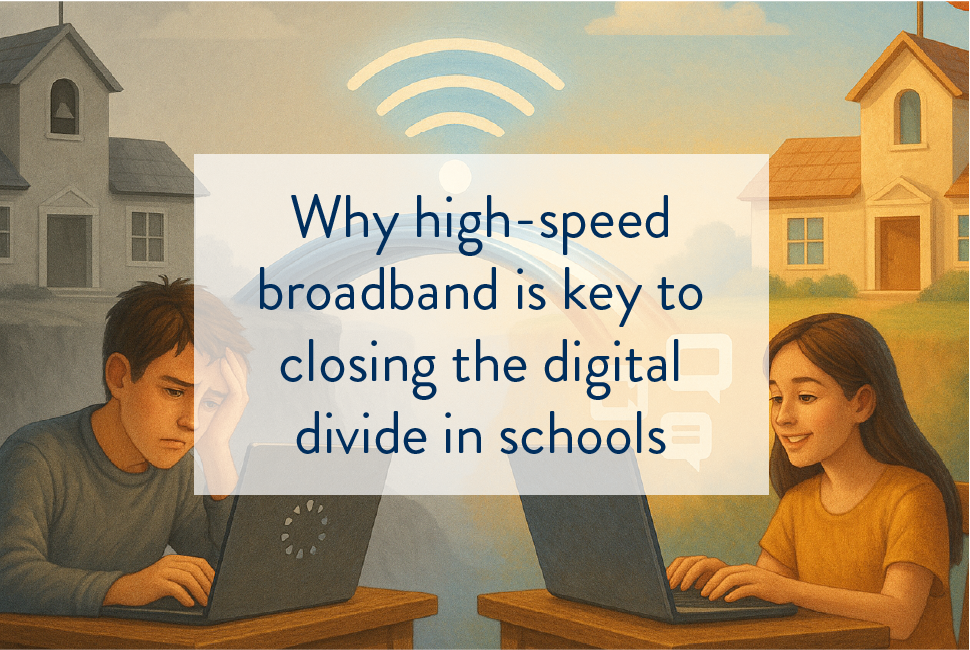
High-speed, reliable broadband is now basic infrastructure for schools. When it isn’t there, the pupils who lose out first are usually those who already face barriers – SEND learners, pupils in disadvantaged areas, and those without good access at home.
As a DfE-approved framework, Everything ICT helps schools and MATs get the right broadband in place quickly, compliantly, and with less admin.
Connectivity as the foundation for digital equity
Devices, platforms and content only make a difference if they can actually be used in the classroom. If the connection drops every time a whole class logs in, access isn’t truly fair.
Strong broadband allows teachers to rely on online learning platforms, homework tools, live quizzes, video and research activities without worrying that the lesson will grind to a halt. It also makes blended and remote learning viable, so pupils who are off through illness, exclusion or caring responsibilities can still access structured learning and support.
Our framework lets schools and trusts stay fully compliant while focusing on what matters: bandwidth, resilience, safeguarding, and value for money – not procurement paperwork.
The impact on SEND pupils
For many SEND learners, technology is a core part of how they access learning and communicate. When the connection is unreliable, it can disrupt SEND provision and personalised support, break predictable routines and increase anxiety.
High-speed broadband supports:
- Assistive technologies – such as text-to-speech, speech-to-text, AAC tools and online therapy platforms, which all depend on stable connectivity.
- Consistency and routine – when digital tools form part of SENDs or individual plans, unreliable internet can disrupt learning and cause anxiety.
- Safeguarding and wellbeing – online check-ins and wellbeing tools only work if they are available whenever pupils need them.
Through Everything ICT, schools can specify SEND-related needs when procuring broadband (for example, uptime SLAs, resilience and rapid support) and work with suppliers who understand safeguarding, and filtering requirements.
Supporting disadvantaged and remote communities
The digital divide is often most visible in rural schools and areas of high deprivation. A well-connected school can help close that gap, even when home connectivity is limited.
With sufficient bandwidth, schools can:
- Run homework clubs and on-site access to online resources for students without reliable internet at home.
- Offer online tutoring and interventions at scale.
- Bring in virtual speakers, careers input, and CPD that would otherwise be out of reach.
Using Everything ICT, schools can compare realistic connectivity options for their area – from leased lines to FTTP and alternative solutions – and bundle broadband with Wi-Fi, switching and filtering through a single DfE-approved route.
MATs and the 2030 broadband target
The DfE has set a long-term ambition for all schools and colleges to meet its digital and technology standards, including fast, reliable broadband, by 2030. For MATs, that means connectivity is now a trust-wide strategic priority rather than just a school-level decision.
A trust-wide approach enables:
- Consistent pupil experience across all schools.
- Better value through aggregated contracts and aligned renewals.
- Centralised safeguarding and security with shared policies and tools.
Making upgrades manageable for busy teams
Most school and trust leaders know when their broadband is holding them back. The real challenge is finding the time and expertise to fix it.
By using Everything ICT, schools and MATs can cut down on paperwork while staying fully compliant. Suppliers have already been checked for financial stability, sector knowledge, safeguarding and (GDPR) data protection, and support is available to shape sensible technical specifications. Broadband can also be procured as part of a wider plan that includes Wi-Fi, networking, security and devices, so digital infrastructure grows in a joined-up way instead of through patchwork fixes.
Learn how to build inclusive digital infrastructure
High-speed broadband is about more than fast downloads. It’s about whether every pupil – regardless of postcode, background, or additional needs – can access the same quality of learning.
Everything ICT can help your school or trust put the right connectivity in place and move closer to closing the digital divide.
🔗 Learn how to build inclusive digital infrastructure with our DfE-approved framework and see how we can support your next broadband upgrade.