When schools need to buy ICT, frameworks are often high on the list. They offer pre-approved suppliers, a quicker process and a clear route to compliance. In many cases, they are a sensible place to start.
The total estimated contract value, including VAT and any options or extensions, makes a difference. A lower-value purchase that falls below the relevant Procurement Act threshold does not need to go through a framework or follow the full process required for an above-threshold public contract. Maintained schools and academy trusts are also exempt from the Act’s specific below-threshold procurement rules. Their own financial regulations still apply, including any requirements around quotes, approvals and record-keeping. For many smaller purchases, going to the open market and gathering a few suitable quotes may be entirely appropriate.
For higher-value purchases that meet or exceed the relevant threshold, a compliant route under the Procurement Act is required. That could mean using a suitable framework or running a standalone competitive procurement. A framework can make that process quicker and reduce the amount of work the school or trust needs to manage itself.
Our Procurement Act essentials guide explains the main thresholds, routes, notices and timelines. It can help schools and trusts establish what applies before deciding how to approach the purchase.
Value is only one part of the decision. For a specialist project, looking beyond a framework may provide a wider choice of suppliers or allow the process to be shaped more closely around the requirement.
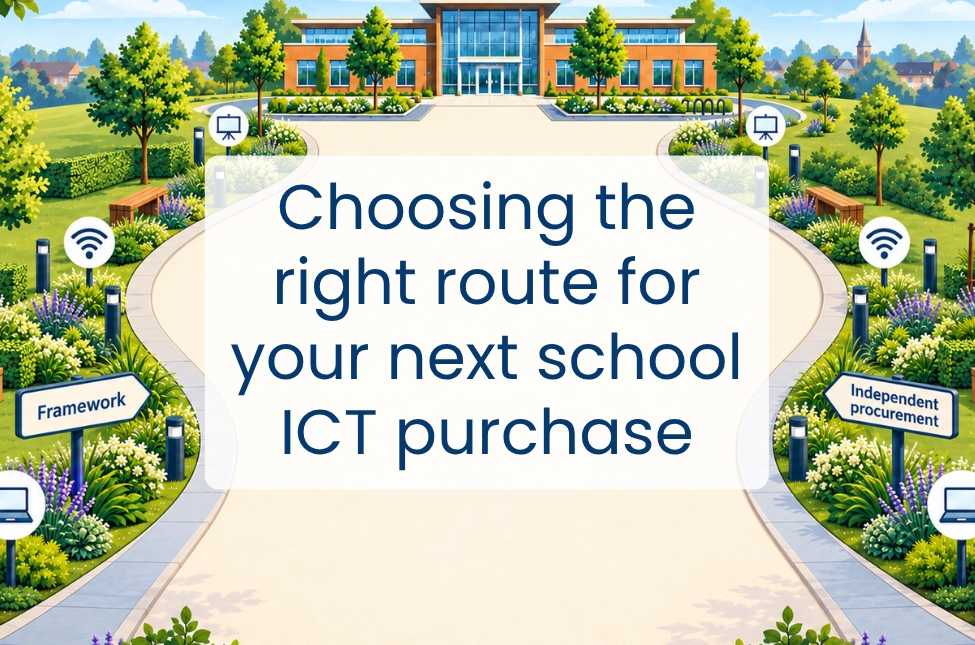
Frameworks remain a strong fit for many school ICT purchases, especially where time and internal resource are limited. It is simply worth understanding what comes with that choice before going ahead. Here is a genuine look at both sides of the ledger.
What a framework gives you
A quicker process. A framework skips the part of procurement that can take the longest: running a full open competition. The suppliers have been appointed through a competitive process, and the framework sets out how subsequent contracts can be awarded. Depending on its rules, a school may be able to select a supplier directly, gather quotes or run a mini-competition. For a routine device refresh, this can reduce the timetable from several months to a matter of weeks.
Access to trusted suppliers. Suppliers appointed to a framework will have been assessed against its financial, technical and legal requirements. This gives schools and trusts a more assured starting point, with much of the initial supplier checking already completed. You’re choosing from a shortlist someone else has stress-tested, rather than assessing supplier capability from a standing start.
Less admin and fewer notices. Running your own above-threshold procurement means drafting evaluation criteria, managing the tender process, handling supplier queries and publishing your own notices at several points along the way. Under the Procurement Act 2023, an open competition will usually involve at least a Tender Notice, Contract Award Notice and Contract Details Notice, with further notices potentially required later. A framework call-off removes the need to advertise a new open competition and cuts out much of the early-stage work, which matters when the people involved are balancing procurement with the day-to-day demands of running a school or trust.
A clear route to compliance. A suitable framework has already been procured in line with the applicable procurement rules. When the school is eligible to use it, the purchase falls within its scope and the call-off rules are followed, the main process, terms and award methods are already in place. A well-run call-off benefits from that groundwork, so the school is not building a compliant process from a blank page. It also provides a clear audit trail to support the final decision if it is later questioned.
Earlier budget clarity. Because pricing structures are already agreed at framework level, you often get a realistic cost picture sooner in the process, rather than waiting for a full tender exercise. The final figure may still depend on quotes or a mini-competition, but having that initial picture can be useful when governors, trustees or a trust finance committee need an initial steer on likely costs.
What you give up
Less flexibility in the evaluation criteria. A framework’s award criteria are set when the framework is established and designed to suit a range of buyers. This may limit the scope to give extra weight to an unusual technical requirement, a particular accessibility need or a specific social value priority. It is worth checking that the available criteria reflect what matters most to the purchase.
The level of flexibility varies between frameworks. Everything ICT takes a tailored approach, working with the school or trust to shape the specification and evaluation around its priorities, within the framework rules. This allows requirements such as accessibility, implementation, support and social value to be properly reflected in the procurement.
A supplier pool that may not fit a niche need. Any framework limits the choice to the suppliers appointed to it at that time. For common ICT purchases, the available pool may offer more than enough choice. For a bespoke integration, a particular accessibility requirement or another highly specialist project, the strongest fit may sit outside the initial supplier list.
Everything ICT allows new suppliers to apply to join its approved supplier network at any time. If a school or trust has a preferred supplier, or identifies a specialist provider with relevant experience, that supplier can be invited to apply and take part in the procurement once it has passed the approval process. This provides access to a wider market while retaining the supplier checks required by the framework.
Less room to negotiate. Framework terms and pricing arrangements are set when the framework is established, so some elements of the contract may have limited room for change. It is worth reviewing implementation, support, service levels, exit arrangements and price reviews before committing to the route.
Pricing can work differently across frameworks. Everything ICT gathers current quotations against the school or trust’s specific requirement, allowing prices to reflect the market at the time of purchase. Quotes can also be compared through a tailored competition or benchmarking process, giving the buyer a clearer view of current value.
Less visibility of the wider market. Going directly to a framework focuses the search on the suppliers available through it. This can save time, although newer, smaller or highly specialised suppliers may sit outside the initial pool.
Everything ICT combines supplier searches and market benchmarking with ongoing supplier applications. New or preferred suppliers can apply when a relevant requirement arises and, if approved, participate in the procurement. This helps schools and trusts reach suitable providers while keeping the process supported and compliant.
Weighing it up
The first things to consider are the value of the purchase and how well the framework fits the requirement. The value will help determine which procurement rules apply and which routes are available. From there, the question is whether the framework offers the right suppliers, terms and flexibility for what you need to buy.
A routine device refresh, a well-understood MIS requirement or a standard connectivity contract may sit comfortably within a framework. Take a MAT replacing laptops and interactive displays across five schools to a common specification. The requirement is clear, several framework suppliers can meet it and the established process can save the trust time and internal resource.
A highly specific requirement may need a wider view. A school planning a bespoke accessible classroom technology setup could need a particular combination of devices, software, integration, training and ongoing support. If the framework’s supplier pool or evaluation criteria cannot cover those needs properly, an independent process may give the school more scope to find the right fit.
Most purchases sit somewhere between these examples. The value, complexity, available suppliers and capacity within the school or trust will all shape the decision. The same organisation may reasonably choose different routes for different purchases.
There is no single approach that suits every ICT purchase. For more detail on the available routes, thresholds, notices and timelines, our Procurement Act 2023 essentials guide takes you through the key points. Everything ICT can also help you work through the options, from compliant framework call-offs to support with an independent procurement. For lower-value purchases, we can support a quote-led process in line with your local financial policies, giving you a practical middle ground between using a framework and managing everything alone. Get in touch to talk through the right route for your next ICT purchase.